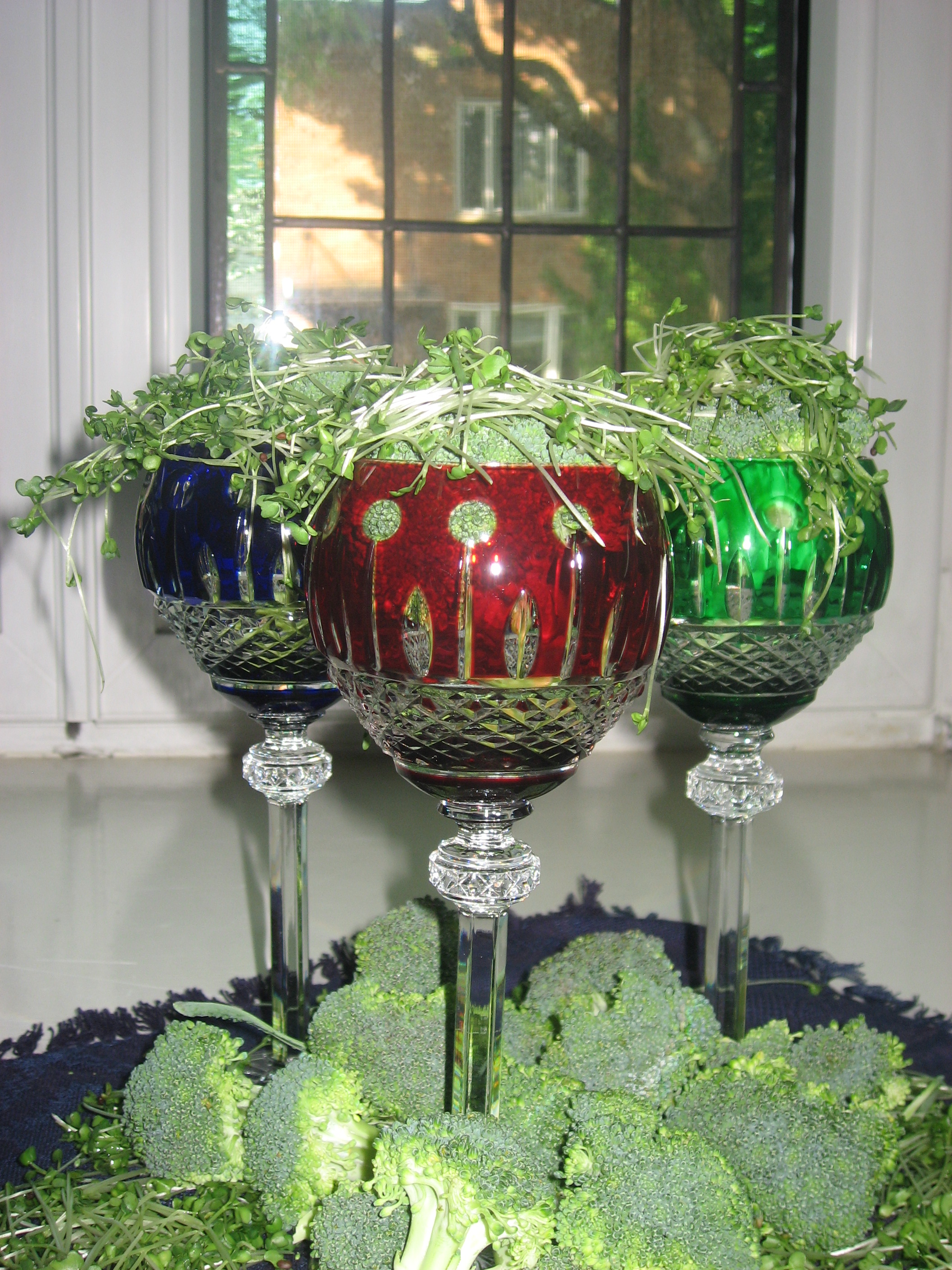
Broccoli and particularly its powerful baby sprouts are among the reigning monarchs in the crucifer family
November 2013 update: Please read the groundbreaking news about crucifers!
Along with vegetables from the Allium family, cruciferous ones TOP the list of foods that fight cancer: Broccoli sprouts and broccoli, Brussels sprouts, cauliflower, cabbage, kale, collards, mustard greens, arugula, watercress, rutabaga and radishes.
The reason:
Crucifers contain loads of glucosinolates, chemical compounds that release two other classes of compounds with extremely high anti-cancer activity—isothiocyanates and indoles.
For those of you with estrogen-dependent cancers, indoles are essential. They “seem capable of causing modifications in the structure of estradiol that reduce the hormone’s ability to promote cell growth… .” (Dr. Richard Beliveau, in his book “Foods that Fight Cancer”) Indoles are abundant in broccoli and Brussels sprouts and cabbage and are also sold as “DIM” supplements.
The other class of compounds include a glucosinolate called sulforaphane, which as its name suggests, contains sulphur, and seems to “greatly accelerate the body’s ability to flush out toxic substances linked to the development of cancer.” (Beliveau again.) Broccoli sprouts, he says, are the best source, often containing up to 100 times the levels of sulforaphanes found in the mature mother. (Look for them in your local health food store, or buy the seeds and grow them yourself.)
But there’s a catch to cooking your crucifers. Glucosinolates—and the enzymes they react with–are extremely sensitive.
• Don’t boil them. The glucosinolates will end up in the water.
• Microwave? The evidence is mixed. For sure, don’t microwave in lots of water, and keep your cooking time short. But why take a risk for the sake of a clean pot?
• Steaming veggies lightly (until bright green) is a good way to cook crucifers and may help retain glucosinolates. Use a small amount of water and a steamer so they don’t touch the liquid.
• Stir frying lightly may also help retain glucosinolates. Use a small amount of olive oil (not extra virgin as it smokes too easily) and low to medium heat.
•There are two big caveats here, according to UK scientist Dr. Paul Thornalley. You must cook or eat your raw crucifers soon after you cut them. If they sit around at room temp, they lose their cancer-fighting nutrients.
• And you musn’t shred them finely. According to Thornalley, shredding vegetables thinly exposes the beneficial nutrients to proteins that degrade them. (Thornalley’s study used 5 mm veggies that sat for 6 hours. )
What about all using those packages of pre-cut veggies you throw in the pan? Nope. They’ve been sitting around for who knows how long. Flash frozen veggies? Nope. The process apparently exposes the glucosinolates to damage from heat.
And how about eating fresh crucifers raw? Most crucifers actually need a little cooking to deactivate certain compounds. As with everything, there are exceptions: watercress– the one crucifer you must always eat raw; radishes and arugula–fine to eat raw but follow my Red Radish Rule for Combining Crucifers.
Always eat a little raw crucifer (a red radish or two) with your cooked crucifers to maximize the anti-cancer properties.
And chew your veggies well. Chomping releases the cancer- fighting nutrients. Plus, the better you grind up those sulphoraphanes, the better your chances of preventing any explosive aftereffects.
 Eat and Beat Cancer
i am on my way to the farm stand right now! What a great article Harriet XXX
LikeLike
Pingback: Roasted Cauliflower Pesto Pasta – A Happy Marriage of Flavours « Jittery Cook
Quality articles or reviews is the key to interest the people to visit the
web site, that’s what this website is providing.
LikeLike
Get rid of microwave, best u can do 4 your health
LikeLike